
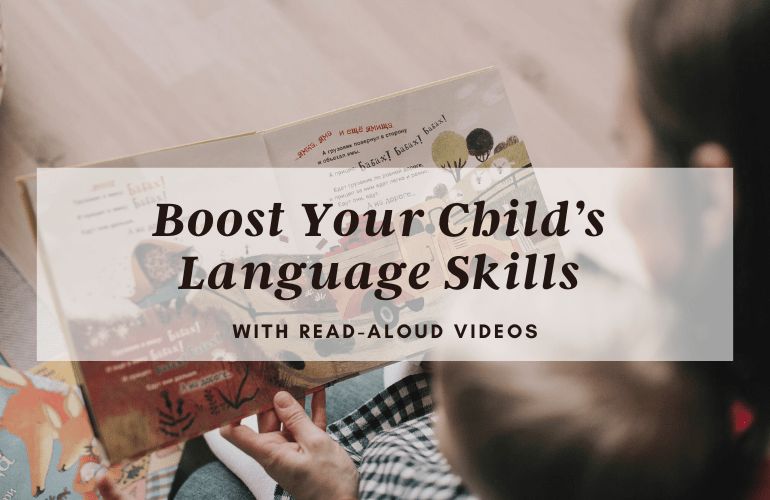
Something about the season’s changing naturally causes us to reflect on the year past. What’s the same, what’s different and the decisions we’ve made and how they’ve played out.
I wanted to share a simple swap that had a really positive impact on my kid. As always, this is just me relating that it worked for my child and our unique circumstances. If it doesn’t resonate with you, don’t feel pressured or like you’re doing anything ‘wrong’.
When I noticed my daughter (we’ll call her T) was struggling to build confidence in forming sentences last year, I decided to make a small change to her limited screen time routine. A change that turned out to have long-term impacts.
The decision started intuitively: if I was finding shows like Paw Patrol too fast and chaotic to follow in Spanish with the background music and speed of speech, how could I expect her to pick up language and sentence structure from them?
Both of us were learning languages: she’s bilingual with a – now much improved – speech delay, and I was improving my Spanish.
We needed something slower. She needed something with clear, simple language and repetition.
That’s where read-aloud story time videos came in.
Why Read-Aloud Videos Work
Read-aloud storytime videos, those with printed books, in my opinion, offer several advantages over cartoons:
- Shorter sentences: Clear and concise language that’s easier for young children to absorb.
- Repetition: Phrases like “Little pig, little pig, let me in”, or “Abuelita, te voy a comer” stick in their minds.
- Simple, engaging themes: Many stories focus on one idea or lesson.
- Lack of distractions: cartoons have multiple ‘camera’ angel changes, thumping background music and so much happening it’s hard to focus on the story, let alone sentances. Storytime videos may have some low volume background music and maybe sometimes part of the page are highlighted in or given a very simple jiggle or sublte motion effect, but more often than not, it’s just the storyteller’s own commentary and questions to their viewer.
But here’s the caveat: you can’t just set your child in front of the screen and walk away (as much as there are so many things to do!). These videos are most effective when they’re interactive. While we watched together, I would repeat new words, point out key ideas, and explain concepts in ways T can understand.
For example, when watching The Little Red Hen on Fable Cottage, I’d pause to ask, “What do you think the hen will do next?” or repeat a line like “Who will help me plant the seeds?” in Spanish. I also ask her how she thinks the hen feels when no one helps. “Is the hen sad? Angry? Or maybe she is disappointed?”
These questions encouraged her to think about emotions and state of mind and also build her vocabulary.
Here are a few resources we’ve loved, and how we use interactive play to incorporate them into daily speaking confidence.
1. Fable Cottage – Bilingual Storytime videos
Fable Cottage offers animated stories in five languages. What we love about them is:
1. The stories are very clearly spoken and well paced. You can switch from the English story to the Spanish story and it’s the same animation to really enforce the languages learning.
2. They have just a little animation to maintain visual interest, but not so much as to be distracting.
3. The vocabulary is well chosen to develop your kid’s speaking and comprehension.
4. They adapt older tales for today’s world. For instance, Jack and the Beanstalk avoids glorifying stealing.
Example of one of her favorites – the little red hen.
Make it interactive:
While watching, I often ask her to repeat phrases like “Not I, said the dog” or guess what the hen will bake next.
This interaction keeps her engaged and helps her practice forming sentences. We also talk about how the characters might feel when they don’t help the hen but still want to eat the bread at the end. These discussions give her a chance to practice empathy and talk about fairness.
2. Mo Willems Elephant and Piggy and Pigeon Series.
We found the pigeon books by Mo Willems in the local library first, and then found the read-aloud videos later. Last year, she was resistant to trying new things at times, which makes sense when so much was changing around her. The Read along videos were a simple way of getting her to become curious about new books in a way that she felt in control of.
If you have a sassy kid who sometimes doesn’t like going to bed, or bath or having storytime, the pigeon series will be highly fun for them. It’s an extremely smart mouthed pigeon with an answer for everything.
But it’s the Elephant and piggy books that are amazing for speech development, because of how much sentence repetition there is and how slow the pace is.
And because of how funny the characters are. Here is an example of one she would love to role-play with me all through summer:
I’ve since bought two huge compilations of these books and she loves “reading” them out to me, practicing the short and simple sentences, and we have countless elephant and piggy DIY activities in the house.
That’s what’s good about read-aloud videos: you can start on screen to get them into the characters and then move offline. To books and roleplay and book-related activities.
It gives kids confidence in their comprehension, and that translates into T getting so excited every time I have a new library haul and offering to come with me on weekends, so she can pick out books.
If you co-parent, read along videos are a perfect introduction to video call storytime, which helps make the transition easier on them, since small kids struggle to talk much on video call. Their bonding language is play, after all.
To this day, T loves nothing better than to come home from school on library haul day, sit in the same chair where I read her stories and pour over the books for almost an hour.
Which, for a small kid, is a very long time.
Resources:
- Elphant and piggy activities ideas on Pinterest
2. Elephant and Piggy official downloads from the author, Mo Willems’ own website
3. Elephant and piggy popsicle sticks from Mombright– we used this and toys at home a lot to act out the entire stories in the books. She would take the role of Piggy, and I was always Gerald the elephant.
4. This downloadable for a special event Mo Willems did at the Kennedy center is fun for getting kids to improvise and invent their own story scenes. They love filling in the blanks of “There is a ____ on your head!” and drawing their own characters.


 Howlite & Coffee
Leave a Reply
You must be logged in to post a comment.